
From 1 January 2016 there are many new laws and important changes to existing laws that are taking place and may affect you, your family or business. Here is an overview of some of the most topical legal changes for this year…
Travel & Road Safety

In New South Wales, new laws relating to cyclists will come into effect from 1 March 2016. From this date, cyclists over 18 must carry photo ID whilst cycling. Cyclists must also keep at least a one metre distance from pedestrians while travelling on shared paths.
Motorists must maintain a one metre distance from cyclists when travelling at a speed of 60km/h or less, and a distance of 1.5 metres when travelling at speeds over 60km/h.
Tougher penalties for drivers using mobile phones come into place in late January. Laws are already in place that mean drivers cannot touch their phones at all while driving unless they are passing it to a passenger; text at all, including the audio text function; use social media; video message; or take photos or videos – even if the phone is connected to a hands free device. From 22 January 2016, breach of the above will result in the loss of four, rather than the previous three, demerit points.
Finance and Low Income Earners

Nationwide, there are new caps on the amounts of tax deductible income streams which will have an effect on some aged care fees, income support payments and other government subsidies like the Low Income Health Care Card.
The Department of Human Services states
“the deductible amount for you and your partner’s defined benefit income streams will be capped. The deductible amount of a defined benefit income stream is also known as the tax free component. A defined benefit income stream is a pension paid from a public sector or other corporate defined benefit superannuation fund where the pension generally reflects years of service and final salary.”
Property
 In New South Wales, changes relating to the way real estate agents and other property sellers can convey financial quotes for properties to prospective buyers should reduce misleading or contradictory price information.
The new laws state that persons who state or publish a quote for a property that is less than a reasonable estimate of the property price will face penalties such as fines and loss of commission. Now, agents must state and publish reasonable quotes and use clear, accurate and reasonable language.
Health and Family

The topical ‘No Jab, No Play’ rules, under which Family Tax Benefit Part A and other childcare payments may only be accessed by parents who are up to date with their children’s immunisation schedule, have now come into effect.
Unless a medical exemption is given, these rules will prevent families who have not vaccinated their children from receiving some family-related government benefits.
If you are concerned about the impact these laws may have on you and would like advice, or for any other legal enquiry, give us a call on 02 8917 8700 or fill out the enquiry box detailing your issue and we will get back to you ASAP.

Thanks to the nomination by one of our delighted clients, and subsequent submission made by our team, we are delighted to announce that Freedman & Gopalan has been short-listed as a Finalist of the Lawyers Weekly Women in Law Awards for the category of:
The Boutique Diversity Law Firm of the Year, 2015
The Lawyers Weekly Women in Law Awards is a celebration of female talent. It recognises the achievements of women who have challenged, influenced or changed the practice of law in Australia.
We thank our loyal clients for their incredible ongoing support and their appreciation of our commitment to delivering a personal and high quality service, and the dedicated team and staff at Freedman & Gopalan who have helped us achieve this.
We take this opportunity to congratulate our team and our clients on being part of our success.
We are mighty excited to have made it this far! Stay tuned, as the final results will be announced on 27 November 2015.
Thank you all once again!

Are you getting married soon? If the answer is yes, then undoubtedly you will have so much to do in the lead up to the big day. You have to choose the perfect dress, a memorable venue, delicious cake and the rings. However, many couples will not have a lawyer on their wedding to-do-list. The harsh reality is that 1 in 3 marriages end in divorce in Australia. While it may be highly unromantic or alarming otherwise to be discussing and negotiating prenuptial agreements, but the sooner you do, the better it is. It will eventually save you when the due time comes to distribute the assets.
Long gone are the days when a prenuptial agreement was a term confined to celebrities and power couples. Nonetheless, young couples who are getting married, with a limited amount of assets and intending to start a life together, are usually exempt from a prenuptial agreement. In the event that both parties possess a significant amount of assets before entering into a marriage, a prenuptial is highly recommended in that scenario.
What is a Prenuptial Agreement?
A prenuptial agreement (‘prenup’) is a legally binding financial agreement entered between two people in a relationship who intend to wed or live in a de facto relationship. In Australia, prenuptial agreements are known as Binding Financial Agreements (BFAs). The document confirms:
- What each of the parties had before the relationship;
- Has brought into the relationship; and
- How finances will be divided and sorted between the two parties if a separation or divorce occurs in the future.
Due to the fact that prenuptial agreements are generally attached to a social stigma, many Australian couples do not consider it before they tie the knot as research indicates only 14% of Australian engaged couples have signed prenuptial agreements. Prenuptial agreements are the seatbelt to any relationship, especially when you consider the fact that every third marriage in Australia potentially ends in divorce according to the Australian Bureau of Statistics.
If you have any questions about an existing prenuptial agreement, or you'd like to consider entering into a prenuptial agreement, give us a call on 02 8917 8700 or fill out the enquiry box and we will get back to you ASAP!

Chances are sooner or later in your lifetime you may question yourself do I really need to hire a family lawyer? The answer is yes you should. Every day across Australia, a range of legal issues arise concerning the areas of marriage, de facto relationships, children and property. Often is the case that many of these family law issues reach the court room and a party to the proceedings, you have every right to represent yourself, but you may not possess the legal knowledge and assurance to do so.
Here are four reasons why you need a highly skilled family lawyer from Freedman & Gopalan Solicitors to represent you in your next case:
1. Knowledge of the Law:
The most obvious benefit of hiring a family lawyer is most certainly, their understanding of the Family Law System and the various loopholes that can make a major difference to the outcome of your case. Without the legal advice of an experienced lawyer you may potentially misunderstand or misrepresent the facts of your case which can prove damaging to your case.
2. Knowledge of the Judicial System:
Various states and territories within Australia are governed by separate procedures and legislation; chances are you may be clueless about the laws that govern other areas. There are different procedures for each state and territory, which only a family lawyer would possess knowledge in regards to. A family lawyer will ensure that all your paperwork is presented accordingly and in line with the Court's procedures, ensuring that your case isn't immediately dismissed.
3. Alternative Dispute Resolution:
An experienced family lawyer will be aware that your family law matter may be best resolved through alternative dispute resolution process such as mediation or informal settlements, saving you time, money and emotional energy. Freedman & Gopalan Solicitors aim to resolve disputes as quickly and as economically as possible, and have achieved non-litigated settlements in the vast majority of their matters. They understand the clients’ economic difficulties during such disputes, and provide assistance to help maintain their cash flow in many circumstances without having to unnecessarily initiate court proceedings.
4. Emotional Support:
At Freedman and Gopalan, we understand that when it comes to cases such as divorce, child custody and property settlement, emotions tend to run high and you may find yourself overwhelmed with stress and the strain of a myriad of other issues. An experienced family lawyer can not only provide satisfactory legal advice, take on the load of proceeding in court but also provide the emotional and moral boost one requires during difficult times.
If you have any questions about a current family law matter, or wish to speak to someone from our office, give us a call on 02 8917 8700.

What is an Apprehended Violence Order (AVO)?
An Apprehended Violence Order (AVO) is an Order made by a court against a person who makes you fear for your safety, to protect you from further violence, intimidation or harassment. All AVOs made by the court prohibit the person who is causing these fears from assaulting, harassing, threatening, stalking or intimidating you. The person you fear, the Defendant, must obey the Order made by the court.
To apply for an Order, you can contact your local police or your Local Court for assistance.
Many women live with the persistent problem of domestic violence as many family violence agencies are struggling to provide services for the growing need in the community. Domestic violence is not just a personal matter; it is matter for the whole community to be concerned about. The only way to go about tackling this persistent issue is to address the root causes and guarantee effective responses to women and children who experience violence.
In line with the Federal Governments recent measures, the newly elected Prime Minister, Mr Malcolm Turnbull spoke for the first time for the country to focus on the increasingly alarming issue of domestic. The changes proposed by the Federal Government are anticipated to take effect as soon as possible.
This year alone, 63 women have been killed a partner or former partner or a member of their family, and 1 in 6 women have experienced violence from a current or former partner, a statistic which should definitely be raising alarm bells for the government and society collectively, but it is also important to remember that men can be victims of domestic violence, too.
What is the Domestic Violence Order (DVO) Scheme?
Domestic Violence Orders are only applicable within the state that they have been granted, however if the protected person (the victim) must apply to the court in each state if they want to move or even holiday, to have the Orders transferred. Such a dilemma means that even leaving for a holiday to another state leaves the victim susceptible to further instances of domestic violence.
Under the proposed scheme, a system to share information on DVOs between all states in Australia, and recognise the orders across state lines will be set up, in order to give those who take out the DVO greater protection. This scheme, proposed at the Council of Australian Governments (COAG) meeting in April 2015 was due to be implemented by the end of 2015.
What is the Government Doing to Help?
The new measures proposed by the PM include a $100 million package to provide assistance to those who are suffering from or experiencing violence within the domestic environment.
This will increase investment in the ‘Safe at Home’ program, helping women install CCTV, get panic buttons and security systems to help them faster contact the police systems. GPS tracking of offenders will be trialled within each state, and the provision of mobile phones to women who may have had their mobile phone/computer/tablet compromised.
The measures do not stop at helping women, though. The government has allocated a sum of money to MensLine, a prominent counselling service that helps men who feel the need to reach out.
Women often reach out to the public sector in times of need, to their GP, a nurse, a police officer or the magistrate of a court. The government plans to implement further training in handling these situations, as there is almost no training in the current education provided, for such a prevalent issue.
School curriculums will also be amended to include a Respectful Relationships program, which will “educate secondary students about gender, violence and respectful relationships. It is one part of a larger strategy to assist schools in meeting state and federal initiatives to prevent violence against women.”
What is NSW Doing to Help?
In line with the Federal Government’s proposed measures, the NSW Government has prioritised domestic violence. Current measures include the provision of an Apprehended Domestic Violence Orders (ADVOs) by the NSW Police. This means that if the police suspect domestic violence has occurred, or is likely to occur, and police can put this in place so that they can control the offender’s movements and make sure the protected person is safe and continue to remain safe.
The NSW police have options to:
- Make an application for an AVO on your behalf;
- Refer you to a support agency;
- Develop strategies to deal with repeat victims and offenders; and
- In the case of criminal offences, arrest and charge the offender, or charge for a breach of an AVO.
To read Mr Turnbull's media release on the Women’s Safety Package to Stop the Violence, click here.
If you have any questions about an AVO, DVO or an ADVO, or you know someone who is suffering from domestic violence, give us a call on 02 8917 8700.

On the 1st of July drastic changes were made to divorce filing fees in the Family Court and Federal Circuit Court has seen costs rise by $355, an almost 42% increase from the previous set amount. Within the time span of almost 5 years, the federal government has consistently escalated the application for divorce filing fees from the initial considerably low amount of $432.
Divorce fees have increased gradually over these years as the government has been attempting to seek out about $90 million from court fee increases for their budgets. The costs rise has had reverberations around all aspects of the legal community and other relevant parties. The Australian Tax Office has already issued statements that they will litigate the fee hike as processing matters in the Federal Court has become too expensive over the years. However those who are going to be most impacted is the average, everyday Australian family.
Such a fee hike will deny people from accessing justice due to their financial vulnerability. The Rule of Law Institute, in their 2013 inquiry submitted that antithetical to the concept of access to justice that divorce filing fees should be made inaccessible. Divorce often comes hand in hand with dire economic consequences for the parties and the filing fee might heighten those personal problems by penalising the person who seeks to apply for divorce. Additionally such fee hikes will also act as a barrier to females who have been victims of domestic violence from seeking out a divorce as they will not be able to afford it. Due to the federal government’s actions in relation to court fees, many solicitors are cautioning that some of their poorest clients will not be able to file for a divorce as the monetary costs will act as barrier.
The government’s gradual cost increasing system will unintentionally restrict the right to seeking a divorce to those belonging to the middle and high-class income earners. In the alternative, the government states that parties filing for divorce have sufficient time to gather the funds to cover the costs that Family Court and Federal Circuit Court are demanding. However in a recent judgement handed down by the Court, application for divorce filing fees have now gone back to the previous cost of $845.
If you are looking to apply for divorce, or require legal advice in relation to a family law matter, give us a call on 02 8917 8700 or fill out the enquiry box and we will get back to you ASAP!
The end of our calendar year is rapidly approaching. Thanks to the support of our clients, our colleagues, our service providers as well as family and friends, Freedman & Gopalan is able to report a successful year of service to our clients. Before you finalise your holiday arrangements, there are a number of legal issues which you may need to consider:-
Have you updated your Will?
Do you have a Will? Does your Will provide for your Estate to be easily administered and finalised? Have you provided for all the Beneficiaries that you ought to? Many of our clients update their Wills before lengthy holiday periods particularly when they are travelling. Please feel free to contact us to discuss this matter.
Holiday Cash Flows
We would all like to provide for bonuses for staff, Christmas parties, Christmas gifts to clients and suppliers and money in the Bank for the holiday period. Have all your customers and clients paid what is due and owing? Freedman & Gopalan are highly experienced in Debt Recovery processes and would be happy to assist you in recovering any outstanding debt. A complimentary letter of demand from Freedman & Gopalan can often result in prompt payment. Please feel free to contact us.
Employer Liabilities at Christmas Parties
As Employers, we are responsible for conducting a safe working environment for all of our staff. The lead up period to the holiday season often means celebrations, staff parties and other forms of entertainment. Be sure that you are aware of your responsibilities to provide a safe environment for your staff. Please feel free to contact us to discuss directions which can be forwarded to staff, ensuring good and appropriate behaviour at staff parties.
Arrangements for Children
Are you planning to go overseas with your children? Does your former partner agree to this? Do the children have Passports? The holiday period can often result in high tension in all families including those where the parents have separated. Have the arrangements for your children to spend time with you and your former partner been adequately considered and agreed to. Now is the time to make sure that these arrangements have been made so that the holiday season does not become a time of argument and dispute.
Having all of these arrangements in place will surely prove for a stress-free and relaxing holiday season. If you require assistance, contact us to ensure that all arrangements have been made.
Please feel free to contact us at any time and we wish you a safe and happy holiday season.
If you require any assistance with your end-of-year arrangements, or wish to put in place arrangements for your children to travel, contact us on 02 8917 8700 or fill out the enquiry box and we will get back to you ASAP!
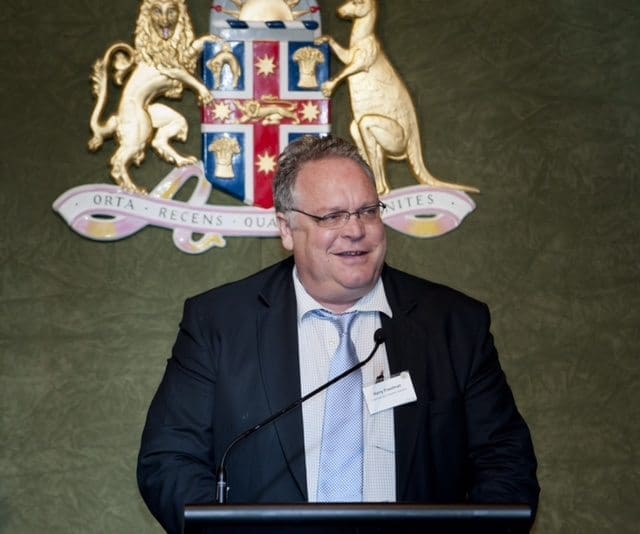
Our Senior Partner, Mr Harry Freedman, of Freedman & Gopalan solicitors, was awarded the Law Society Pro bono solicitor of the year award at a lavish ceremony held at Parliament House on Wednesday evening, 29 October 2014, as part of
In his acceptance speech, Mr Freedman , who had previously been nominated for the same award in 2013, acknowledged the importance of assisting those less fortunate in the community. He stated that the giving of charity was a concept ingrained in his family life and also part of his Jewish culture. Over the years he has acted on numerous matters for those in need and was mostly successful in obtaining positive results.the Justice awards 2014.
He acknowledged the support of his Partner and staff in assisting in being able to provide this service and encouraged all professionals to consider offering a certain amount of time per annum to provide similar assistance to those in need. He stated that, “rewards do not always have to be financial”. The award given by the Law Society of New South Wales ought to better be publicised throughout the community to counter the few but highly publicised instances when solicitors had acted poorly to the detriment of clients. He stated that, “the reputation of solicitors is often harmed by the greedy actions of a few members, as the vast majority of solicitors always act in the best interests of their clients”. Even though he commenced a new partnership in the last 12 months, he and his partner were committed to putting back into the community and intended to continue on this path.
You may recall an incident where a Sports Commentator, (Rex Mossop) undertook a citizen's arrest of a man walking naked to a local beach.
The term "citizen’s arrest" carries with it a lot of folk law and myth. It is however a legitimate form of conduct which can be undertaken in certain circumstances.
The power to make a citizen’s arrest is set out in section 100 of the Law Enforcement (Powers and Responsibilities) Act 2002 (NSW). The section reads as follows:-
A person (other than a police officer) may, without a warrant, arrest a person if:-
a. The person is in the act of committing an offence under any Act or statutory instrument; or
b. The person has just committed any such offence; or
c. The person has committed a serious indictable offence for which the person has not been tried. Pursuant to Sub-section 2, a person who arrests another person under this section must as soon as reasonably practical, take the person, and any property found on the person before an authorised officer to be dealt with according to law.
Notwithstanding this right to do so and perhaps notwithstanding a very strong urge to do so in certain circumstances, extreme care and caution must be exercised at all times. One needs to be careful about your own safety not knowing whether or not the person that you are trying to arrest is mentally stable or has a weapon. At the same time the power granted by this section also imposes on such a person an obligation to be able to determine whether or not the person misbehaving is in fact committing an offence. That is a decision which creates in some circumstances a need to be able to understand the law.
One must also exercise control over the manner in which the arrest in to be undertaken. Notwithstanding the misconduct of the person whom you wish to arrest, you still have a duty of care to only use reasonable force and to act appropriately. It is generally safer to call the police who have far greater powers and training in undertaking arrests.
If you have any queries in relation to a citizen's arrest, or have been charged in a criminal matter, give us a call on 02 8917 8700 or fill out the enquiry box and we will get back to you ASAP!