

Interested in visiting family on the Gold Coast? Or maybe fulfilling that dream of taking a trip to the Canadian Rockies? Why not use your annual leave?
Annual leave, which is also known as holiday pay, enables an employee to be paid whilst taking time off work. This National Employment Standards entitlement enables full-time and part-time employees four weeks of annual leave, based on their ordinary hours of work. However, this does not apply to casual employees or those on probation.
Before you start booking that holiday, there are some changes to this entitilement in some awards.
The changes have been made by the Fair Work Commission and relate to the following areas:
- Payment for annual leave;
- Managing large (‘excessive’) annual leave balances;
- Cashing out annual leave;
- Taking annual leave in advance.
Let’s focus on the third point, cashing out your leave:
The changes to annual leave, taking effect from 29 July 2016, reveal that most awards now allow employees to cash out their leave if they do the following:
- Have a signed written agreement with their employer;
- Have at least four weeks annual leave left after the cash out;
- Don’t cash out more than two weeks each twelve months.
Under legislation, you can only cash out your holiday pay if you are under a registered agreement. In order to find out if this applies to you, go to the Fair Work Commission website and investigate your options.
If you are covered by a registered agreement, there are certain rules that must be followed when cashing out annual leave:
- An employee needs to have at least four weeks of leave remaining;
- A written agreement needs to be made each time annual leave is cashed out;
- An employer cannot force or pressure an employee to cash out their leave;
- The payment for cashed out annual leave has to be the same as what the employee would have been paid if they took the leave.
Some have noted that whilst these changes to workers’ rights reflect a greater degree of flexibility, it also highlights the status quo: an inability to place importance on recreational time.
So, when calculating whether or not you can cash out your annual leave, do consider whether it is the best option for you as opposed to taking time out from work.
If you wish to know more about your working rights, please call Freedman & Gopalan Solicitors on 02 8917 8700 for free legal advice today.
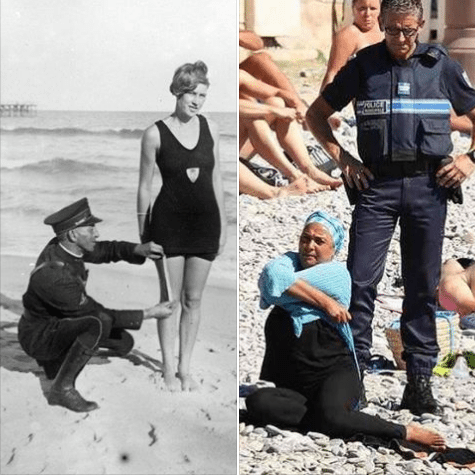
Earlier this week, photos emerged depicting several police officers standing around a woman sitting on a beach in Nice, forcing her to remove her burkini. The head scarf covering, leggings and a loose, long top were considered against ‘respecting good morals and secularism’ in French society.
The ban on the burkini, designed by Lebanese-Australia designer Aheda Zanetti, has been incredibly controversial from the perspective of many for its clear discrimination against Muslim women in particular. This item of clothing was designed for the purpose of allowing Muslim women to engage more in Western culture without feeling like they had to disrespect their own.
Zanetti has argued
“I created [burkinis] to stop Muslim children from missing out on swimming lessons and sports activities.” The ban is not a prevention tool against radicalisation, but “harming the community, taking the beach away from some people and punishing them. That’s just hatred.”
After the terror attack on Nice on July 14 this year, the French belief of keeping religion outside of politics, formally known as laïcité, has become more important than ever. It was argued by the Nice tribunal this week that the burkini has the power to offend the religious status or non-religious beliefs of others at the beach and could be regarded as “a provocation exacerbating tensions held by the community.”
Whilst the Nice tribunal has upheld the ban in the face of public disorders and terrorist attacks on behalf of Jihadists, many are arguing that France is marginalising Muslim women. The impact of causing these people to feel unwelcome can cause withdrawal and increase radicalisation.
The importance of keeping the States secular is an important goal for the French, but should this come at the cost of telling women what they can and cannot wear, especially when their clothes are not the cause of the problem at hand?
John Dalhuisen from Amnesty International has argued that, “French authorities should drop the pretence that these measures do anything to protect the rights of women” as they are in fact “invasive and discriminatory measures” that “restrict women’s choices, violate their rights and lead to abuse”.
Many continue to argue that our entrance into the 21st century has marked a greater step towards gender equity. This ban is a significant indicator that this is not the case as the ban itself “does nothing to increase public safety but a lot to promote public humiliation”.
If you feel like you are being discriminated against based on your religion, or have further comments on this current issue, please do not hesitate to contact our offices on 02 8917 8700.

When the Pokeball isn't in your Court
We get it, you want to be the very best, like no one ever was. However, it is important to keep in mind that your virtual reality gaming can have some very real life consequences. So when you’re on the hunt for that rare Pokemon, here are a few tips to keep you out of trouble.
Courting trouble:
As an aspiring Pokemon Trainer it is important for you to have a firm knowledge of the places you need to be; where the best Pokestops are, the location of lures and that rogue Charmander. The Court houses are not one of these places and should therefore be avoided on the journey to becoming a Pokemon Master.
In a statement issued by the NSW Department of Justice on its Facebook Page:
GOING TO COURT IS NOT A GAME: POKÉMON GO TRAINERS SHOULD LOOK ELSEWHERE FOR DIGITAL CRITTERS.
Attention budding Pokémon trainers: you do not need to step inside a Courthouse to find Pokémon. A reminder that the use of recording devices in NSW Courts is prohibited under the Court security act 2005 – section 9 – and carries a $22,000 fine or imprisonment for 12 months (or both). Stay safe and catch 'em all!
While the statement may be a light-hearted jibe, the consequences of its infringement is anything but.
Pokémon Hunting and Driving
Not to be outdone, the NSW Police twitter account further added
What do you get when you mix driving and Pokémon Go? $325 and four demerit points"
As amusing as this exchange may be to the casual observer, it is a testament to fact that although the content of Pokémon Go may be fictional, the consequences of in contravention of the law is not. There is value in maintaining the distinction between fiction and reality, otherwise you may find yourself on the inside of a not so virtual prison.
Remember, at the end of the day, the message is to be safe and ‘catch ‘em all’.
If you find yourself in a not-so-virtual prison as a result of playing Pokémon Go please do not hesitate to contact Freedman & Gopalan Solicitors on 02 8917 8700.

Every year, the India Australia Business & Community Awards (IABCA) celebrate Indian entrepreneurship within Australia and commemorate the extraordinary efforts of Indians who are making a real difference to the community in their professional capacities.
For almost two decades, Mittu Gopalan has demonstrated exceptional and progressive leadership in the business sector. Acting as the sole principal of Freedman & Gopalan Solicitors, Mittu works consistently to attain justice for those who find themselves in unjust situations and deliver pragmatic, tailored solutions for her clients. After Harry Freedman’s death in 2015, Mittu has tackled each problem she has faced with perceptiveness and determination, rising above adversity to reach the goals they both had envisioned for their business. An embodiment of the firm’s motto of “People over Profits”, Mittu personally ensures that each of her clients are given the highest standard of professional service at minimal cost. Mittu’s compassion for her clients, drive to instigate meaningful change and innovation have seen her achieve great success in both Australian and international contexts. As such, Mittu is one of the leading businesswoman and solicitor in Australia, inspiring young women who are striving for success in the legal profession. She balances her professional life and family commitments with equal compassion and effort.
Mittu’s incredible achievements as an entrepreneur make her highly deserving of the honour to be short-listed as a Finalist for the IABCA’s ‘Businesswoman of the Year’ Award 2016.
Results will be announced on Friday 28 October 2016.

After a long ordeal of almost two long years, a Sydney mother has been reunited with her 7 year old son.
The father who was estranged from the mother had allegedly kidnapped and taken the son to India on the basis that he wanted to attend his brother’s wedding in mid-2014. However after the wedding, the father announced to the mother that he did not wish to return to Australia nor did he wish to return their son to her. He indicated that mother and son could only be reunited if she was willing to resign her work in Australia and be prepared to join him and his parents in India along with their daughter.
Our client realised that she was in a terrible marriage and that her husband had in fact tricked her and left for India under false pretences taking their 4 year old son with the intention of never returning. To make matters worse, our client also discovered that he had depleted their bank account. Our client experienced significant challenges in maintaining a harmonious relationship with her husband’s in-laws and as a result she did not feel it was safe to return to India with her 2 year old daughter.
In light of the ongoing marital issues and the fact that the father had taken the son in a deceitful manner and had refused to allow her son to travel back to Australia, the mother commenced proceedings.
Proceedings in Sydney
Proceedings were commenced in Family Court of Australia in early 2015 and Orders were obtained whereby the father was required to return the child to the mother to Australia immediately. However as India is not part of the Hague Convention, the Orders obtained from Australia were unable to be enforced.
In light of this impediment, we assisted our client and facilitated the commencement of proceedings in India against the father in order achieve the outcomes of the Family Law court order, namely the return of the child to the mother.
Proceedings in India
After a year of protracted legal proceedings in India the Family Court in India handed down a Judgment in favour of the mother confirming that the son should in fact be handed over by the father to the mother.
The Strength of a Mother
Though the above case appears straightforward and uncomplicated, our client had had to deal with a number of significant challenges simultaneously. Our client had to deal with:
- issues surrounding the dissolution of their marriage and equitable partition of assets;
- the ongoing vexatious acts of an estranged husband; the processes to reunite with a son that had been taken away under false pretences;
- the challenges of having to work with two distinct legal jurisdictions and processes;
- the management of challenging financial circumstances; and
- having to balance work and parenting responsibilities as a single parent with no other support.
However this determined and amazing mother rose to challenge and hurdles that was generated through each of these situations and demonstrated remarkable tenacity and resilience to achieve a just outcome both here in Australia and India.
This is a remarkable story of a mother who faced numerous ordeals and demonstrated a woman’s determination, commitment, belief, and most importantly faith in the system to show that no forces or evils can in fact keep her doting children away from her.
To the world she might be an common, middle class mother but to her children and to all who know her, she is the unsung hero.
A Wonderful Result
Freedman & Gopalan has been honoured to have had the privilege of being the mother’s legal representatives in Australia and a close partner and advisor through the protracted proceedings in India, that were managed through our associate entity in Kerala, India. It is pleasing to that our year long relationship resulted in justice being delivered, and at the end of the day, a long lost son was in fact reunited with his mother.
We at Freedman & Gopalan take pride in helping people with the challenges that life throws at them, and delivering hope and justice when all seems lost.
We take a caring and compassionate approach to helping those in need, providing: pragmatic counsel; cost effective solutions; and working with an ethos of “people before profit”. As demonstrated in this recent case, we are there for our clients.

Did you travel to Europe this winter to enjoy a little more summer? Maybe you got yourself a nice tan? But how to prove it? You posted it onto your Facebook page along with the caption, ‘living the good life’.
We hope you weren't attached to that photo, because your rights to it have diminished with the click of a button.
You hear of horror stories online where a person has posted a photo to their social media account, whether it be funny or sad, and days later it appears as the banner for an online Facebook or Twitter campaign.
For those of us who have taken the time to sit down and read the 14,000 word terms of service that Facebook provides when we create an account, it becomes clear that we are not just uploading photos and posts for ourselves. We are not fully in control of our online actions.
What you have done is sign up for something you probably never intended, and your click of agreement to those terms and conditions is part of the legally binding contract you have now entered into with Facebook.
Facebook's Terms read as follows in relation to your content:
For content that is covered by intellectual property rights, like photos and videos (IP content), you specifically give us the following permission, subject to your privacy and application settings: you grant us a non-exclusive, transferable, sub-licensable, royalty-free, worldwide license to use any IP content that you post on or in connection with Facebook (IP license). This IP license ends when you delete your IP content or your account unless your content has been shared with others, and they have not deleted it.
This paragraph spells both good news and bad news. It means that Facebook has a license to use your work, like photos or posts, but it doesn’t own your photos. Under Copyright Law, the image generally belongs to the creator unless the contracts stipulates otherwise. Originally, being the creator, you have rights as to displaying, producing, distributing and perhaps even earning royalties from your work.
These rights are diminished once you choose to post it on the web.
Facebook, most likely aware that the majority of its users will not read the terms and conditions, understands that your willingness to post and share your personal details, grants them a right to use these in whichever way they see fit.
The take home message? Be careful with what you share online! Whilst Facebook and its brothers and sisters, Twitter and Instagram, do not own your work, there are loopholes in the contracts you sign to ensure that your personal details do not remain within your control.
If you believe you have been wronged online or simply wish to know more about online safety and copyright laws, do not hesitate to contact our offices on 02 8917 8700.

She has waited it out for months but the day has come. She has finally escaped. But what now? She is turned away from several places of refuge on account of the long list of women waiting before her. It doesn’t matter. Days later she is stabbed to death with a pair of scissors.
This is the story of a real woman, and it is not as uncommon as we would like to think.
The urgency and horror that lurks behind these stories is coming to light and it appears that the NSW Government is finally seeing it.
Women and children who are victims of domestic violence in NSW will soon be able to leave their homes faster and seek refuge without a penalty for abandoning a rental property. The change is among reforms to residential tenancy laws set to take place in early 2017. The effect of these laws should improve and increase the options for victims of domestic violence.
As it currently stands, a victim of domestic violence in a fixed lease situation must provide 14 days’ notice to their landlord, in addition to a final apprehended violence order (AVO), which can take approximately 12 months to obtain. This doesn’t include the potential liabilities that the victim may incur, such as being blacklisted on tenancy databases.
Innovation and Better Regulation Minister, Victor Dominello, has stated that “this is an unacceptable and often burdensome process for people living in dangerous situations”.
These reforms will have the power to prohibit agents and landlords from listing a victim of domestic violence on a database where a debt or property damage arose because of a violent partner. Further, they should move towards changing the list of reasonable excuses to change locks in order to prevent a tenant from domestic violence.
These proposed changes will also recommend that NCAT be given the right to ensure that the perpetrator is liable for damage to a property arising from domestic violence, regardless of whether they are listed on the lease agreement.
In bring this serious issue to light, movements towards raising awareness and ending domestic violence such as the Counting Dead Women Project, have highlighted the need for legal action. It is evident from the statistics that the current tenancy laws are not operating to protect these victims.
These reforms send a clear message: women should be allowed to feel safe in their homes or given the right to leave without punishment.
If you are in a similar situation or wish to know more about the proposed reforms to tenancy laws, please do not hesitate to contact Freedman & Gopalan on 02 8917 8700.

As the cliché goes, there are only two certainties in life: taxes and death. With this in mind, it is extremely important to ensure that you have a Will in place so that when you pass away, your hard-earned finances and cherished belongings are distributed in a fashion that you are comfortable with. In addition, having an up-to-date and complete will, overseen by your solicitor, ensures that the people who mean the most to you – whether this be your children, partner, charities, or other relatives and friends – are allocated the finances and belongings that you intend.
As shown on the recently-aired SBS Insight episode “Where There’s a Will”, if your Will is not particularly clear, and particularly if it has not been crafted by an experienced solicitor, then it may be successfully challenged – causing financial hardship, emotional turmoil and unnecessary family feuds for your loved ones.
With this in mind, Freedman & Gopalan suggests you think about the following when deciding to create or update your Will, and speaking to our team about executing your Will…
What you should include in your Will
Who:
- You should clearly identify yourself as the creator of the Will and give enough information about yourself (such as your address) so that the document can clearly be identified as yours.
- You should clearly name the parties you wish to include your Will and, again, list sufficient information about them so that they may be clearly identified.
- You should also clearly state who you wish to be the Executor of the Will.
What:
- What do you want to give away and in what proportion to each party? You should clearly list the assets you wish to leave in your Will.
How:
- How do you want your assets distributed? You should think about the different situations through which this could occur – for instance, if one person passes away before another, how any assets left to them should be divided.
When:
- When do you want these assets to be distributed? For instance, if you would like to leave an inheritance for a loved one who is currently a minor, you should think about clearly indicating at which age any assets should be distributed.
These are merely questions that you should think about to ensure you understand the significance of having a thorough, clear and well-crafted Will. If you are seriously thinking about creating or updating your Will, it is always best to speak to an experienced solicitor and have them discuss your various options.
If you have any questions regarding your current Will, or want to have a Will drawn up, fill out the enquiry box or give us a call on 02 8917 8700 and we will get back to you ASAP!

Before the Rio Games started, athletes were being warned not to use any supplements which may contain banned substances which are not listed on product labels. This standard has been implemented since the first World Anti-Doping Code came into existence in the hopes of developing an honest and talent-based sporting culture.
So what is going on with Russia? Why is it that nobody from Russia is able to compete in the Rio Games?
It is important to note, perhaps universally, that sport plays a critical role in society. It has the power to bring people together, improve one’s fitness and inspire others to be proud of something. Thus, when an element is introduced to challenge this key pillar of society and potentially reflect poorly on the institution as a whole, the law will step in.
Russia has found themselves in a spot of difficulty. That spot is the ban on the Russian track and field team from the Rio Games. Russia appealed to the Court of Arbitration for Sports (CAS) after the decision of the International Association of Athletics Federation (IAAF). Acting in accordance with the legal right to sanction, the International Olympic Committee has respected Russia’s right to procedural fairness but ultimately, Russia’s athletics team will remain banned from competing.
However, some are concerned this is not enough.
Sports lawyer and former NRL player, Tim Fuller, believes that in the report compiled by the World Anti-Doping Agency (WADA), there were approximately 25 other Russian sports implicated in substances scheme developed by Russian laboratories. Should additional legal action be taken against these sports as well?
Some have argued that WADA is not strong enough as it lacks the power to enforce the compliance of all signatories. In its attempts to promote Olympism and true talent, legal action must be taken against those who do not comply in order to deter future competitors from making the same mistakes.
If you have been caught for substance abuse or simply wish to know more about the laws surrounding anti-doping, do not hesitate to contact our offices on 02 8917 8700.