

In New South Wales and across Australian law, ‘drink driving’ – that is, driving under the influence of drugs and alcohol – is treated very seriously. For this reason, it is vital that you obtain legal advice as soon as possible when dealing with a possible offence of this nature – whether this be having been charged with an offence, having had your licence suspended or having received a penalty notice.
Drink Driving Offences
Under section 9 of the Road Transport (Safety and Traffic Management) Act 1999 (NSW), it is an offence for individuals with a prescribed blood alcohol concentration (PCA) to drive, attempt to drive, or occupy the seat next to the holder of a learner licence who is driving a vehicle. Charges relating to drink driving are PCA or DUI (driving under the influence) offences.
As most people are aware, the law limits the amount of alcohol a driver is permitted to have in their system while driving. The penalties that drivers are liable for if they are ‘over the limit’ are subject to several factors. For instance, the penalties for drivers who hold Learner, Provisional or Full licences can differ as L and P Plate drivers may not have any alcohol in their system while driving.
The courts can impose different penalties depending on whether it is a person’s first offence or whether they have previously been convicted of a major traffic offence in the last five years. This will include any PCA offence, driving under the influence of drugs, any offence under the Crimes Act 1900 (NSW), dangerous or negligent driving offences under the Road Transport (Safety and Traffic Management) Act 1999 (NSW), or refusing to submit to testing for drugs or alcohol.
Penalties
In New South Wales law the courts have a wide array of penalties available to impose in relation to drink driving offences. Though imprisonment is an option available to the court, other penalties include community service, suspended sentencing for rehabilitation, and participation in an intervention program, or an order under section 10 of the Crimes (Sentencing Procedure) Act that dismisses the charges completely. It is important to seek legal advice as soon as possible when faced with a drink driving charge.
If you have any questions about drink driving related charges or have been charged with one of the above offences, give us a call on 02 8917 8700 or fill out the enquiry box and we will get back to you ASAP.
 From 1 January 2016, changes to the law have been made that mean if you do not vaccinate your children against certain diseases, then you may not be eligible for particular family-oriented government payments. This change in law reflects the public’s growing division over whether or not parents should be forced to immunise their children. As the debate gains momentum in wider social discourse, it is inevitable that parents who are separating will disagree on whether to immunise, and continue to immunise, their children.
Further, family conflict regarding immunisation can come into play where one parent wishes to travel with their child to a country where it is recommended they receive further vaccinations, and the other parent objects.
As this issue has gained momentum in recent years, there is growing case law that indicates the direction the Family Court is likely to head in for future cases involving parental conflict over the vaccination of their children.
The Family Court of Australia has made several landmark decisions regarding this issue in recent years. In Kingsford v Kingsford, a mother seeking an injunction to prevent the child’s father from immunising their child in the traditional manner – that is, following the standard course of immunisation procedures advised by medical professionals – and seeking to instead only immunise their child using the alternative homeoprophylaxis immunisation approach (which is the process of using homeopathic remedies to prevent infectious diseases), was rejected.
In Duke-Randall & Randall, the mother of children who had not been vaccinated sought orders restraining their father from immunising the children. In response, the Family Court ordered that any injunctions or Court Orders restraining either parent from vaccinating their children should be discharged.
It appears that the Family Court’s current approach towards legal conflicts concerning the vaccination of children is to consider the traditional vaccination schedule to be in the best interests of the concerned children.
If you are concerned about parenting conflict over your children as you separate from your partner, or for any other family law issue, give us a call on 02 8917 8700 or fill out the enquiry box detailing your issue and we will get back to you ASAP.
 Receiving an inheritance from a family member, friend or other loved one after they pass away is an experience common to many people. Unfortunately, inheritances can also result in disputes when one or more parties question what they or others have, or have not received. When one receives an inheritance before or after they separate from a spouse, the situation can become even more complicated. In this situation, it is best to consult a Family Lawyer to ensure your rights under the law are protected.
If you and your former spouse are involved in a property settlement, how will an inheritance you received during your relationship be taken into account? This complex scenario will rely on several different elements, such as whether the inheritance was received during the relationship or after the relationship ended; the monetary value of the inheritance; and whether the former spouse can argue that they made a contribution to the inheritance. In this situation, it is simplest if the inheritance was received after your separation from your former spouse. In this scenario, it is more likely you could successfully argue that the inheritance should not be able to be claimed by your former spouse. However, this may have a negative flow-on effect in regards to what you may be entitled to when it comes to the property settlement of you and your former spouse’s combined assets.
The situation becomes more complicated when the inheritance was received while you and the other party were still in a relationship. It is generally more likely that the inheritance will be treated as a “joint asset” rather than as yours alone. In this situation, the party who received the inheritance may receive a positive “contribution adjustment” when it comes to negotiating the property settlement between parties. However, this may not necessarily be the amount that was actually given as inheritance. If this happens, it is important to discuss this with a Family Lawyer who can advise you on your best course of action.
Consulting a Family Lawyer becomes especially important in cases where when you have children, if you and your former spouse lived together before separating, as well as many other factors that can affect whether an inheritance is viewed as a joint asset to be divided between parties. This is because eachof these factors could bring forth further legal rights or obligations. Additionally, whether either of you had a Binding Financial Agreement or Pre-Nuptial Agreement in place will be important in determining the legal outcome of these matters.
As each family law matter is distinctive, it is important to get legal advice specific to your personal set of circumstances.
If you have any questions about your inheritance, family law matter or want to create a Binding Financial Agreement, give us a call on 02 8917 8700 or fill out the enquiry box and we will get back to you ASAP.
From 1 January 2016 there are many new laws and important changes to existing laws that are taking place and may affect you, your family or business. Here is an overview of some of the most topical legal changes for this year…
Travel & Road Safety

In New South Wales, new laws relating to cyclists will come into effect from 1 March 2016. From this date, cyclists over 18 must carry photo ID whilst cycling. Cyclists must also keep at least a one metre distance from pedestrians while travelling on shared paths.
Motorists must maintain a one metre distance from cyclists when travelling at a speed of 60km/h or less, and a distance of 1.5 metres when travelling at speeds over 60km/h.
Tougher penalties for drivers using mobile phones come into place in late January. Laws are already in place that mean drivers cannot touch their phones at all while driving unless they are passing it to a passenger; text at all, including the audio text function; use social media; video message; or take photos or videos – even if the phone is connected to a hands free device. From 22 January 2016, breach of the above will result in the loss of four, rather than the previous three, demerit points.
Finance and Low Income Earners

Nationwide, there are new caps on the amounts of tax deductible income streams which will have an effect on some aged care fees, income support payments and other government subsidies like the Low Income Health Care Card.
The Department of Human Services states
“the deductible amount for you and your partner’s defined benefit income streams will be capped. The deductible amount of a defined benefit income stream is also known as the tax free component. A defined benefit income stream is a pension paid from a public sector or other corporate defined benefit superannuation fund where the pension generally reflects years of service and final salary.”
Property
 In New South Wales, changes relating to the way real estate agents and other property sellers can convey financial quotes for properties to prospective buyers should reduce misleading or contradictory price information.
The new laws state that persons who state or publish a quote for a property that is less than a reasonable estimate of the property price will face penalties such as fines and loss of commission. Now, agents must state and publish reasonable quotes and use clear, accurate and reasonable language.
Health and Family

The topical ‘No Jab, No Play’ rules, under which Family Tax Benefit Part A and other childcare payments may only be accessed by parents who are up to date with their children’s immunisation schedule, have now come into effect.
Unless a medical exemption is given, these rules will prevent families who have not vaccinated their children from receiving some family-related government benefits.
If you are concerned about the impact these laws may have on you and would like advice, or for any other legal enquiry, give us a call on 02 8917 8700 or fill out the enquiry box detailing your issue and we will get back to you ASAP.
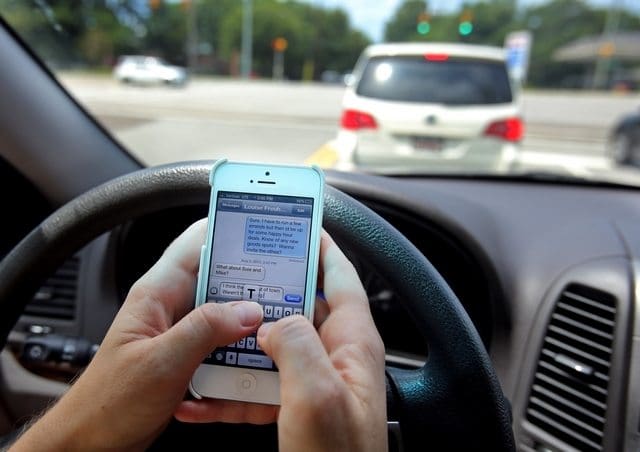
The issue of mobile phone use while driving made news headlines recently when it was discovered that Opposition Leader Bill Shorten had been texting while driving. While the danger of this activity is widely known – using one’s phone while driving is one of the most common distractions while driving – what is less commonly known is the new laws to take effect in New South Wales over the Christmas 2015 period and from 22 January 2016, which will see tougher penalties for those caught texting and driving. As such, it is important to be aware of the legal implications of this activity as a further deterrence.
Texting and Driving: Learner and Provisional P1 Licence Holders
Currently, drivers on Learner and P1 licences must not use their mobile phones at all whilst driving. This includes talking on the phone, playing music, using navigational apps and, of course, texting – even if the phone is connected to a hands free device. To use a mobile phone, the car must be turned off, parked and out of the line of traffic. Under the new laws, these restrictions will remain the same. However, breach of these restrictions will result in the loss of four demerit points and subsequently a 3 month licence suspension.
Texting and Driving: P2 and Full Licence Holders
Currently, P2 and full licence holders are only permitted to use their mobile phones when the phone is connected to a hands free device that does not require any part of the phone to be touched or held. This means that drivers can talk on the phone, play music and use driving related apps such as navigation apps that do not require touching the phone. The phone must be connected to a hands free device - it is still illegal for the phone to sit on the driver’s lap while on loudspeaker. Of course, even though these activities are legal, this does not means they will always be safe or appropriate for the driving conditions.
Drivers cannot touch their phones at all while driving unless they are passing it to a passenger. Further, drivers cannot text at all, including the audio text function; use social media; video message; or take photos or videos – even if the phone is connected to a hands free device.
Importantly, breach of any of these unlawful activities resulted in the loss of double demerit points during the Christmas 2015 period and will be included in the upcoming Australia Day Long Weekend Double Demerits (22 January 2016 - 26 January 2016). Further, from 22 January 2016, breach of the above will result in the loss of four, rather than the previous three, demerit points.
If you have been involved in a traffic related offence and would like advice, give us a call on 02 8917 8700 or fill out the enquiry box detailing your issue and we will get back to you ASAP.

In Australia, the rights and obligations relating to privacy are largely regulated by legislation such as the Privacy Act 1988 (Cth). However, this legislation fails to recognise increasingly common privacy breaches and obligations such as privacy regulations by governments and the Privacy Policies of domestic and international organisations. Further, and surprisingly to most people, under common law there is no legal right to privacy in Australia.
The Australian Government
The Australian government’s relatively recent decision to begin retaining residents’ metadata, and the implications of this, is of increasing concern for many people. More generally, an increasingly technologically advanced and globalised society means that we are all much more exposed to potential privacy breaches, whether this be via website hackers, such as the recent Ashley Madison hack (in which hackers released details of people using an online dating site); or simply going out in public, where cameras on phones or drones mean that you can be photographed or recorded without your permission almost anywhere.
Technology
Technology is certainly outpacing the current state of law when it comes to privacy in Australia.
The question seems to be not if, but when, courts will recognise an individual’s right to privacy. In fact, other common law countries have begun tackling this very issue.
The Tort of Privacy
In the New Zealand Court of Appeal case Hosking v Runting & ORS (2004) CA 101/03, the majority of the court came to a radical decision in recognising a new tort – the tort of privacy – in which a privacy breach was to be held where a ‘reasonable expectation of privacy’ existed, and where publication of the facts relating to the breach would be offensive to the reasonable person.
So where does this leave the future of privacy law in Australia? Legislative changes, societal pressure and time will be determinative factors.
If you are concerned about your privacy rights under Australian Law then give us a call on 02 8917 8700 or alternatively fill out the enquiry box detailing your issue and we will get back to you ASAP.

As Christmas and summer holidays approach, many will take this time to travel throughout Australia. A family holiday should be relaxing, fun and reinvigorating – and the hard earned trip you’ve saved up for should not be diminished by accommodation that is unsafe, not up to scratch or fit for purpose, or not what was advertised. But if this does happen, it is best to be prepared and know your rights.
Under Australian Consumer Law, you are protected by particular guarantees for services that are provided within Australia. For holiday makers, these guarantees are particularly important when considering protections from accommodation services that are unsafe or not fit for purpose. These guarantees cannot be contracted out of – so even if the accommodation provider’s contract terms exclude liability, you can rely on the below protections.
What the Guarantees Ensure:
These guarantees ensure that services must be delivered:
With due care and skill;
- This means that accommodation services must be safe.
In a way that is fit for purpose;
- If you disclose to the accommodation provider a particular purpose for which the service will be used, and book the accommodation based on this, there is a guarantee that the accommodation will be fit for that purpose.
In a reasonable time period;
- This will apply in situations where no time has been allocated for the booking.
What if you need to cancel accommodation?
Unfortunately it is likely you will be subject to the accommodation provider’s terms and conditions when cancelling accommodation, unless there is a “major failure” in relation to the service. This means “the services would not have been acquired by a reasonable consumer fully acquainted with the nature and extent of the failure” or “the services are substantially unfit for a purpose for which services of the same kind are commonly supplied and they cannot, easily and within a reasonable time, be remedied to make them fit for such a purpose”.
It is thus important to read the fine print before you book accommodation services.
What if the accommodation you booked does not match the description online?
The room/s that you receive must match any descriptions that were given when you booked - for example, images of the room that is advertised online should be the same as the room you receive.
You should also consider the above guarantees – if you book the accommodation on the basis that your room will have pool access, and there is no pool access, then this breaches the guarantee that the service will be fit for purpose. Where the room is not fit for purpose, would not have been purchased if the actual nature of the room was known, then this can constitute a major failure.
If you feel that any of these guarantees and protections have been breached, contact Freedman & Gopalan on 02 8917 8700 or fill out the enquiry box on our website, and we will get back to you ASAP.
 Purchasing your first property will probably be the most expensive thing your ever buy. As a result it is important to have a fair understanding of the process. As a first home buyer you will undoubtedly be inundated with many thoughts, questions and be cautious as every step and decision will be a significant one.
Below is a list of four pointers to keep in mind when you intend to purchase your dream property and become a proud home owner.
- Plan Your Budget
Before contemplating to purchase a property it is important that you create a workable budget and stick to it. It is essential that you take into account your current employment circumstances, financial commitments and any possible changes that may occur like an increase in interest rates by the Reserve Bank of Australia.
- Know Your Limitations
In any circumstance, do not proceed to purchase a property that you will not be able to afford with the passing of time. It is easy to believe that you will be able to pay off the mortgage after a few stressful months however that will not always be the case. Also, when making the decision to purchase property, it is vital that you are mindful of the proximity of amenities near your property (public transport, shopping centres, hospitals etc.) and any other property features such as the number of bedrooms and the existence of a garage or carpark.
- Be a Wary Buyer
It is important that you do not fall into the trap of believing everything you are told. As the saying goes ‘not everything that glitters is gold’. In order to avoid falling victim to glittery property façades that really just hide a never-ending list of problems, you should:
- conduct several property inspections,
- carry out thorough building and pest inspections,
- investigate prices of similar houses that are being sold in the same locality,
- speak with the agents and local council, and
- attend auctions.
It is also a good idea to be aware of all the costs associated with buying a property which would include:
- legal/conveyancing fees,
- agent's fees,
- government charges (Stamp Duty, LPI Fees etc.), and
- other ongoing costs such as strata, council rates and water charges.
- Before You Sign Seek Legal Advice
Make sure you carefully read and understand all terms, conditions and fine print of any document involved with the sale. You should always seek independent legal advice before signing any contract.
At Freedman & Gopalan we provide competitively priced conveyancing services to individuals, families and businesses throughout Sydney and all of NSW. F&G will take the time to explain to you all the stages from start to finish in selling and buying the property or business and we will keep you updated about the progress of your matter.
If you have any questions about buying or selling a property, or would like to speak to someone about a conveyancing matter, give us a call on 02 8917 8700 or fill out the enquiry box and we will get back to you ASAP.

Schoolies Week is the annual celebration for year 12 students marking the end of their schooling, and it is once again here, as thousands of students congregate across various places interstate and overseas. Whilst it is encouraged that these newly graduated students have fun, there is always the impending risk of misbehaving which may lead to severe repercussions. Many of these students are unaware that their disobedience or law breaking will have long-term implications, as such affecting their future employment, ability to travel overseas and applying for membership to various companies.
School leavers who also intend to take a gap year in order to travel abroad should also be wary that each country has its specific set of laws that govern the region and any criminal conviction can impact negatively on their visa application and ability to stay within their country of choice.
Having graduated from high school, it is definitely a time for students to reminisce over the good times throughout their schooling life, however the key to having a memorable time is to exercise caution and common sense.
Interstate Schoolies - What You Should Be Aware Of
It is essential for schoolies to keep in mind that in relation to criminal convictions, the individual will be charged under the laws of the State in which the offence occurs. The following are a list of pointers students might want to keep in mind:
- According to the Juvenile Justice Act 1992, in Queensland, a 17 year old is seen as an adult in the eyes of the law and will be treated that way.
- The state of drunkenness, consumption of alcohol or unawareness of the laws governing the State in which the offence has occurred is not an appropriate nor suitable defence to the crime. Additionally, consuming alcohol under the age of 18 is deemed a criminal offence as per the Liquor Control Reform Act in each State.
- The damage of public or private property, whether it be the hotel, motel or camping site are deemed criminal offences in the eyes of the law.
- Using crude language towards the public or an officer of the law will lead to the individual being detained.
- The common act of obtaining and using a false identification card can lead to a myriad of criminal charges, additionally the individual who has supplied the card will also be held liable under the law.
Overseas Schoolies - What You Should Be Aware Of
Ensure that you are familiar with the laws of the country that you intend to visit as part of your Schoolies celebrations, as the range of categories which an individual can be charged under differ from Australia. Moreover, it is ideal to obtain travel insurance however be mindful that most policies do not reimburse an individual for an injury arising from being intoxicated and the involvement in any form of extreme sports.
If you have any questions about your child’s safety or would like to discuss a criminal matter, give us a call on 02 8917 8700 or fill out the enquiry box and we will get back to you ASAP.